
Dear Friends,
Thank you for making 2025 the best year yet for Propel a Cure! Your support
is proof that a small all-volunteer organization, together with patients,
family members, and friends, can make an outsized impact on Crohn's disease
research.
Only a couple of months ago, the
Ghosh Lab at UC San Diego
generated international headlines by solving a 25-year old mystery surrounding
the role of the most common genetic
mutation
associated with Crohn's disease.
The pilot study associated with the Ghosh Lab project was funded by Propel
a Cure donors and will be the basis for at least two additional upcoming
studies that are laying the groundwork for new therapeutic approaches for
Crohn's patients. You can read more about this lab's remarkable progress
in the updates below.
|
|
RESEARCH UPDATES
|
|
UC SAN DIEGO TEAM UNLOCKS
BACTERIAL CLEARANCE MECHANISMS
|
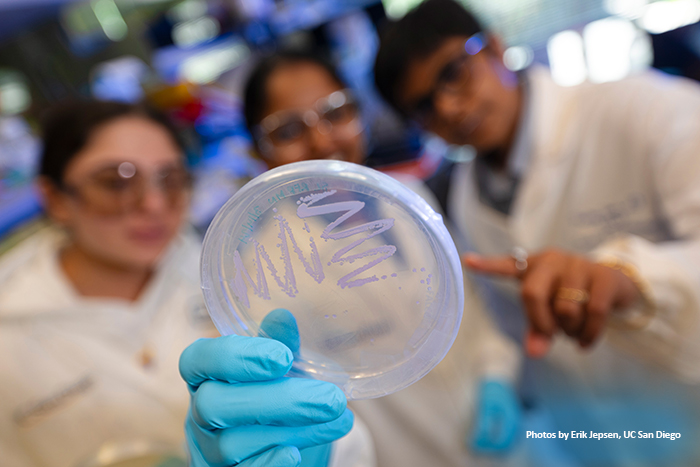
The Ghosh Lab at UC San Diego is the recipient of a two-year $100,000
grant from Propel a Cure. Using advanced computer models powered by machine
learning, these scientists, with the assistance of the
Institute for Network Medicine, have uncovered a deeper pattern behind why immune defenses fail in chronic
inflammatory diseases such as inflammatory bowel disease (IBD).
Their recently published work in
The Journal of Clinical Investigation
showed that harmful bacteria can overwhelm key gut immune cells called
macrophages when a critical molecular partnership breaks down. This partnership
involves an immune sensor called NOD2 and a helper protein called GIV.
When GIV levels are reduced—or when NOD2 carries mutations that prevent
this molecular "handshake"—macrophages lose their ability to clear bacteria.
This discovery has been foundational. It has provided the first clear
explanation for why people carrying certain NOD2 mutations face an extremely
high risk of developing Crohn's disease.
Instead of eliminating harmful microbes, their macrophages allow bacteria
to persist and multiply, driving chronic inflammation.
In follow-up work, the team uncovered how this molecular handshake protects
immune cells from being hijacked. Bacteria attempt to take control of a
universal cellular messaging system called cAMP—similar to an internal
alarm network. When pathogens succeed, cAMP levels rise, disabling the
macrophages' ability to kill microbes and calm inflammation. When the NOD2–GIV
partnership is intact, immune cells regain control, cAMP levels are restrained,
and threats are cleared.
The researchers mapped when and where this battle for control occurs,
showing it is central to resolving infection. This work is currently under
peer review prior to publication.
This latest advance goes even further. In a new perspective article, the
researchers show that these molecular battles are not unique to IBD or
to a single immune pathway. Instead, many microbes exploit the same short
molecular "codes" to confuse immune signaling, while the body has evolved
matching systems to detect and neutralize these tricks.
This reframes immunity not just as detecting microbes, but as constantly
verifying whether cellular messages are trustworthy. Importantly, this
opens the door to new therapies aimed at restoring immune logic itself—rather
than simply suppressing inflammation.
|
|
|
|
LAB FURTHER CONFIRMS EFFECTIVENESS
OF ENGINEERED MICROBES
|
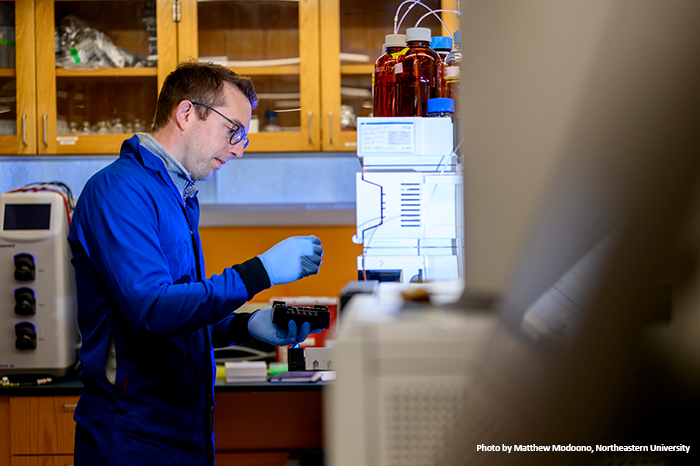
Propel a Cure, in partnership with the Mendez Family Foundation, is also
funding research at Northeastern University's
Woolston Lab
with a $100,000 grant. This past quarter, the team there continued to
demonstrate progress toward understanding the role of the molecule hydrogen
sulfide (H2S) in Crohn's disease and therapeutic development.
They have now established that the lab's specially engineered microbes
can deliver H2S in the intestine more effectively than existing chemical
methods, suggesting that these microbes are an ideal tool for testing the
elevation of intestinal H2S in laboratory mice. This is a critical step
toward understanding the possible role of H2S in Crohn's.
The scientists have also begun testing the engineered microbes in dextran
sulfate sodium (DSS)-induced Crohn's mouse models (as opposed to normal
mice versions). These specialized mice mimic the effects of IBD seen in
human patients.
Using their H2S-producing and -consuming microbes, the team is further
investigating how the elevation or reduction of H2S impacts Crohn's disease
pathology.
They are thus far encouraged by study results and, in the future, will
be experimenting with the delivery of different levels of H2S, as well
as expanding the number of mice in the study.
|
WEBINAR HIGHLIGHTS PROPEL A CURE- SPONSORED PROJECT AIMS
|
This past November, Dr. Benjamin Woolston of Northeastern University, who is spearheading a Propel a Cure-sponsored study on the role of hydrogen sulfide in intestinal inflammation, presented an exclusive hour-long webinar on the project to our Hope Builder recurring donors.
Among the highlights
was his description of how engineered microbes being used in this study
may lead to a transformative therapeutic for IBD patients.
Propel a Cure's current Hope Builder donors include Raihaneh Bokharai,
Sue Cragg, Vince Cvijanovic, Natalie Muccioli Emery, Dina Fiatarone, Stephen
Hall, Diana Miguens, Gustovao Nonohay, Kathleen Pinckney, Anthea Pritchard,
Devin Rasmussen, Hellie Saffery, Lakshmi Sampeth, Misty Triplett, and Eric
Voisard.
To receive invitations to research roundtables and access to other exclusive
events and behind-the-scenes news, sign up to become a Hope Builder recurring
donor by visiting
propelacure.org/donate
and selecting the monthly, quarterly, or yearly option.
Click
here
to view a one-minute highlight of Dr. Woolston's webinar, as presented
recently on Propel a Cure's social media.
|
BOARD ANNOUNCEMENT
LEADING RESEARCHER NAMED TO PaC
SCIENTIFIC ADVISORY BOARD
|
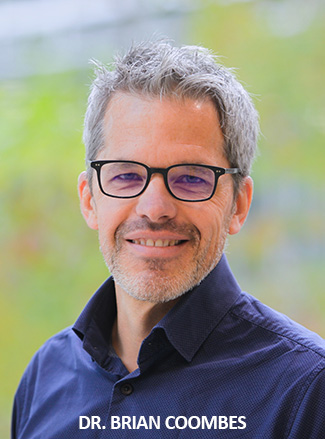 We are excited to welcome Dr. Brian Coombes to Propel a Cure's
Scientific Advisory Board. This body advises our organization on the scientific merits of proposed
projects and distribution of research funds, as well as on other substantive
scientific issues or questions as needed.
We are excited to welcome Dr. Brian Coombes to Propel a Cure's
Scientific Advisory Board. This body advises our organization on the scientific merits of proposed
projects and distribution of research funds, as well as on other substantive
scientific issues or questions as needed.
Dr. Coombes is a Professor and Chair of the Department of Biochemistry
and Biomedical Sciences at McMaster University (Canada). He is an internationally
recognized expert in infectious disease and host-microbe interactions,
focusing on gut health, chronic inflammatory disorders, and antibiotic
drug discovery. His research combines molecular microbiology and pre-clinical
models to uncover how bacterial pathogens influence disease and immunity,
particularly in the gut.
Coombes Lab
collaborates widely with industry partners on novel therapeutics for Crohn's
disease and antibiotic resistance. Dr. Coombes is a fellow of the American
Academy of Microbiology and has published over 220 papers and abstracts.
Of his appointment, Dr. Coombes says, "I'm very happy to be helping this
organization dedicated to cures for Crohn's disease."
|
VIDEO INTERVIEW
IBD FERTILITY AND PREGNANCY
|
As part of its continuing series of video interviews with leading IBD researchers, Propel a Cure met with Dr. Uma Mahadevan to discuss the newest findings and recommendations on contraception, fertility, pregnancy, and breastfeeding for IBD patients. If you, your partner, family member, or friend with IBD is considering pregnancy at some point, this interview is a must-see!
|

Click
here
to watch the video.
|
Dr. Mahadevan, a gastroenterologist and professor of medicine at the University of California, San Francisco, is a global expert on the management of pregnancy and drug safety in IBD patients. She chaired the Global Consensus Statement on the Management of Pregnancy in IBD in Inflammatory Bowel Disease and is the principal investigator of the ongoing PIANO study (Pregnancy in IBD and Neonatal Outcomes).
Detailed information on the topics discussed in the video is available by visiting the PIANO website at PIANOstudy.org.
|
|
PARTNERSHIPS
|
NEW PHILANTHROPIC PARTNERSHIP PROGRAM
|
We are excited to announce the launch of Propel a Cure's Philanthropic
Partnership Program. This initiative is for companies and individuals who
would like to give back to the IBD community by more formally aligning
with Propel a Cure through investing in innovative Crohn's disease research
targeting cures. Various benefits tiers are available for partners. To
learn more, please email us at
info@propelacure.org.
|
|
FATHOM: OUR NEWEST CORPORATE PARTNER
|
Propel a Cure would like to thank Fathom, our newest corporate partner,
for its generous support. Fathom is an AI wellness companion designed specifically
for IBD. You can find more details at the Fathom
website.
|

AI Wellness Companion for IBD
|

|
MISTIC PERFUMES: PAYING IT FORWARD
|
Mistic Perfumes was founded by a high school student living with Crohn's disease specifically to support research for cures. The company, which gives 100% of its profits to Propel a Cure, recently made its second donation, which will be designated for a cutting-edge research project to be announced later this year. To learn more, visit misticperfumes.com.
|

|
HIGHLAND PARK HIGH SCHOOL
SUPPORTS PROPEL A CURE
|
Every year since 1994, the student body and staff of Highland Park High School (Highland Park, IL) have chosen a nonprofit organization as the focus of a month-long Charity Drive that raises funds and awareness. We are excited and honored to announce that we have been selected as the beneficiary of their 2026 effort!
 Several PaC Board members recently participated in the school's January 16th kick-off assembly for the campaign, which will conclude in mid-February. Students will lead a full calendar of events, with all proceeds going toward Propel a Cure-sponsored Crohn's research. Fundraising efforts will range from a silent auction to a "winter wonderland" dance to a sports day that will include team competition.
Propel a Cure is grateful and inspired by the passion of these young supporters and looks forward to bringing you coverage and results of the HPHS Charity Drive in our Spring 2026 e-newsletter. If you would like to help these incredible students who are raising funds for Crohn's research, visit hpcharitydrive.org.
|
RESEARCH REVIEW
NEWS ABOUT CROHN'S AND IBD
|
According to a large international study of newly diagnosed Crohn's and ulcerative colitis patients, IBD begins with a major shift in gut bacteria, even before treatment starts. Beneficial, anti-inflammatory bacteria drop off, while oxygen-tolerant bacteria (including some normally found in the mouth) increase.
Article Link:
MEDICAL NEWS & LIFE SCIENCES
|
A team led by King's College (London) has discovered how a specific group of immune cells in the gut -- ILC3s -- activates a powerful signaling molecule that they hope to better harness to calm inflammation and repair tissue in IBD patients.
Article Link:
KING'S COLLEGE NEWS CENTRE
|
Scientists have established that smoking fuels mouth bacteria to grow in the gut, triggering an immune response that worsens Crohn's disease. They hope to develop new therapies from this key finding.
Article Link:
SCIENCE DAILY
|
In a major new study about fistula biology, Oxford researchers have discovered that Crohn's "fistulas are lined by concentric rings of 'rogue' fibroblasts – cells that normally maintain tissue structure - that have become reprogrammed to act like cells involved in early fetal gut development. This out-of-context activity causes fibroblasts near the tract surface to destroy the surrounding tissue, promoting tunneling, while deeper fibroblasts produce stiff, fibrotic material that stabilizes and maintains the tunnels."
Article Link:
UNIVERSITY OF OXFORD
|
Thank you for your support!
|
Thank you for supporting Propel a Cure! If you can get involved, please
let us know. We would love to have you as a volunteer!
If you'd like more
information about Propel a Cure or have suggestions for topics you'd like
to see covered in the next newsletter, please contact us at
info@propelacure.org.
Together we can make a difference!
|

ANGELA CLARK
President and CEO |
|

info@propelacure.org
|
PropelaCure.org

|


