Dear Friends,
We can't thank all of you enough for being part of a movement to bring
safer, more effective treatments and cures to Crohn's disease patients!
In case you missed our announcement in early March, we wanted to let
you know that Propel a Cure, in partnership with the Mendez Family Foundation,
has awarded a $100,000 grant to Northeastern University's Woolston Lab
for a study on the role of hydrogen sulfide – a molecule produced primarily
in the gut – in intestinal inflammation.
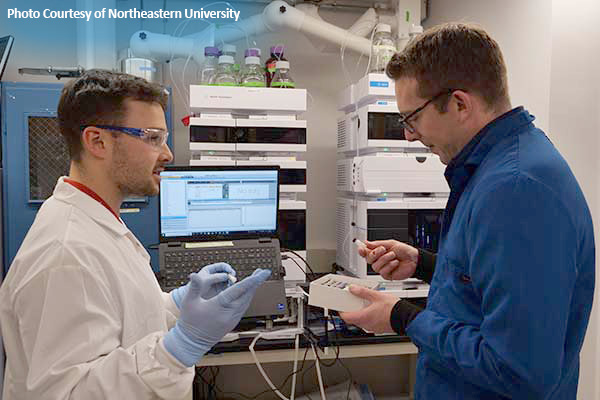
Headed by Dr. Ben Woolston, the
Woolston Lab
has engineered unique synthetic probiotic strains to use in this study
that will be tested to gain insights into how excessive production of hydrogen
sulfide might help trigger inflammatory bowel disease (IBD) inflammation
and what part hydrogen sulfide may play in disease progression.
Even more exciting, one of this team's newly developed strains has demonstrated
particular promise in reducing the production of hydrogen sulfide in human-derived
ex vivo studies and could potentially lead to an oral microbiome therapeutic
that could treat or prevent IBD!
Should preclinical testing prove successful, the Woolston Lab is already
affiliated with a spinoff biotech startup – Concordance Therapeutics –
which would be well positioned to bring such a therapeutic to clinical
trials.
This truly groundbreaking study represents the first attempt to use engineered
microbes to regulate sulfide levels in the gut microbiome.
|
PROMAKHOS THERAPEUTICS PROJECT UPDATE
|
In addition to the new Woolston Lab project, Propel a Cure's sponsorship
of a transformative Crohn's study at Boston-area
Promakhos Therapeutics
continues, with very promising progress.
The Promakhos team is focusing on molecules in our gut that promote immune
control, bacterial clearance, and wound healing that seem to populate at
much lower levels in Crohn's disease patients. Over the past few months,
their scientists have completed the analysis of additional stool samples
from Crohn's patients and are happy to share that their original findings
have been validated. They have now analyzed 47 samples from patients and
26 samples from healthy volunteers. They observed that, overall, stool
from patients with Crohn's disease showed a 3-fold reduction in the bacterial
molecule level compared with healthy volunteers. Moreover, patients with
active disease showed a stronger reduction (5-fold reduction) in the level
of these molecules than patients with inactive disease, while some individual
patients showed a reduction of up to 10-fold. Promakhos researchers are
developing a medicine to treat Crohn's disease by supplementing the levels
of these natural molecules to restore gut immune function and promote healing.
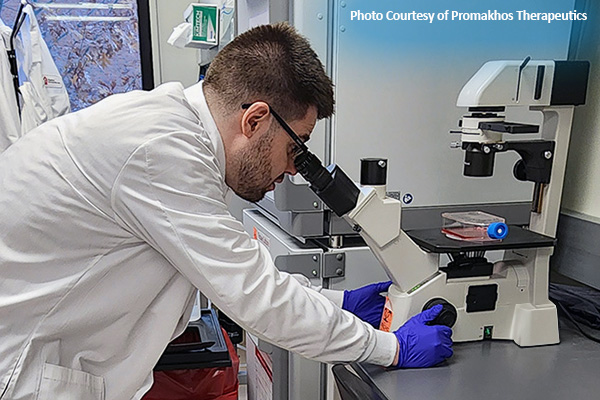
The researchers have now started the next phase of the project. This involves
transplanting stool from patients with active Crohn's disease and reduced
levels of the bacterial molecules into mice to establish a more clinically
relevant and humanized mouse model of bowel inflammation. Encouragingly,
the team has observed that mice transplanted with stool from patients showed
a 4-fold reduction in fecal levels of the bacterial molecules, as compared
with mice transplanted with healthy control stool. The team now aims to
further expand on this study and to use this mouse model to further validate
the therapeutic effect of their candidate drug before they move towards
the clinic.
Finally, in an effort to apply findings on an even broader scale, Promakhos
has further engaged with researchers at KU Leuven, a university in Belgium,
to analyze more stool samples from European Crohn's patients. Their scientists
are partnering with the
HUMANOID
Center of Research Excellence
at the University of California, San Diego to explore using intestinal
organoids cultivated from patient tissue to evaluate the efficacy of their
oral therapy.
|
CROHN'S RESEARCH: THE STATE OF PLAY
|
With recent federal funding cuts to U.S. medical research, the role of nonprofits in sponsoring critical Crohn's disease studies has become more important than ever. Propel a Cure is one of the only nonprofits supporting early-stage, innovative IBD research with the exclusive goal of safer, more effective treatments and cures. Many other funding entities are more risk averse and choose to invest in traditional lines of research that don't advance us beyond the status quo or require a project to be much further along in the process, meaning that many cutting-edge initiatives never get off the ground due to lack of resources. These types of projects, which have always been difficult to fund, are even more at risk now.
Propel a Cure has funded a study on T-cell receptors and associated antigens by Stanford University's Mark M. Davis Lab (under pre-publication review) and is currently sponsoring two other cure-focused projects at Boston-area Promakhos Therapeutics and Northeastern University's Woolston Lab (in partnership with the Mendez Family Foundation) in the effort to unlock the causes and players in Crohn's disease.
Right now your donations are absolutely critical to helping the teams we support move us closer to cures. No gift is too small! To donate online, visit our website, where you can give via credit card, debit card, Venmo, PayPal, electronic funds transfer, DAFs, and even stock transfers. To donate by check, send to: Propel a Cure, 259 Gleneigh Road, Charlottesville, VA 22911.
Thank you for your support – together we can make a difference and move the needle!
|
RESEARCH REVIEW
|
There is a growing body of research tying Epstein-Barr virus (EBV) to susceptibility to Crohn's disease. A study recently published in the journal Gastroenterology found that, compared with healthy controls, a cohort with anti-EBV antibodies was 3 times more likely to eventually develop Crohn's disease, with evidence of EBV exposure preceding patients' Crohn's diagnosis by 5-7 years.
Article Link:
Boston Children's Hospital
|
|
"In a landmark effort, the INTERCEPT project has launched Europe's first biomarker trial aimed at preventing Crohn's disease before symptoms start."
Article Link:
Pharma Times
|
|
The Helmsley Charitable Trust is funding a study testing GLP-1 antagonists (sold under brandnames including Ozempic and Wegovy) as a means to promote epithelial healing in Crohn's patients.
Article Link:
Icahn School of Medicine at Mount Sinai
|
|
There has been conflicting research on breastfeeding and IBD risk, with recall bias being an issue in some cases. This large multi-year Scandinavian study found that the duration of exclusive or any breastfeeding was not associated with offspring IBD risk, nor did it provide any protective effect.
Article Link:
Clinical Gastroenterology and Hepatology
|
|
THANK YOU FOR YOUR SUPPORT
|
 Annabelle Hall, Founder
|
Thank you for supporting
Propel a Cure! If you can get involved, please let us know. We would love to have you
as a volunteer! If you'd like more information about Propel a Cure or have
suggestions for topics you'd like to see covered in the next newsletter,
please contact us at
info@propelacure.org. We are convinced that together we can make a difference!
|
|